Education is changing fast as AI tools enter daily study routines. Students now look for smarter ways to learn, plan, and solve tasks. Many feel pressure from heavy workloads and limited time. This creates strong demand for simple and useful tools.
Indie founders can move faster than large companies. They test ideas quickly and build niche products for real student needs. Small teams often win in this space.
This article explains why the market is growing. It also shows product ideas, ways to earn, and tools to build and launch. You will see where to start and what to focus on.

Why Student Demand for AI Tools Rises
Student demand grows due to clear pressure points in daily study. Homework loads increase across subjects. Deadlines stay tight. Many students struggle to keep up with pace and complexity. As a result, they turn to an AI homework helper to handle tasks and support problem-solving. Access to fast answers changes expectations. Students no longer accept long waits for help. They want support at any time, not only during class hours.
Student habits have changed in response to new tools and study pressure. Key shifts include:
● Preference for instant answers instead of long explanations
● Expectation of personalized study paths based on skill level
● Short attention spans that limit focus on long materials
● Strong shift to phone-based learning and quick access
● Need for time efficiency due to busy schedules
Gaps in Traditional Education
Schools often fail to match these new needs. Content remains static and does not adjust to each student. Lessons follow one pace for all, which leaves some behind. Feedback also takes too long. Students wait days for results or corrections. This delay slows progress and reduces motivation. AI tools fill this gap with fast and adaptive support.
Why Indie Founders Have an Advantage in This Market
Small teams often move faster than large companies. They focus on narrow problems and act without long approval chains. This matters in a market where students need to shift quickly. Indie founders can test ideas early and adjust based on real use. Large firms tend to spend more time on planning and internal steps. That slows product release and limits flexibility.
Speed Over Scale
Indie teams build and ship in short cycles. They release simple versions first, then improve step by step. Quick iteration helps them find what works. Mistakes cost less and lead to fast fixes. In contrast, big companies aim for large launches. That approach takes more time and carries higher risk if the idea fails.
Direct Access to Users
Founders often speak directly with students. They use online groups, forums, and campus networks. Feedback comes fast and in clear terms. This loop helps shape features that match real needs. Products improve based on actual use, not internal guesses.
Lower Development Barriers
Modern tools reduce the need for large teams. ChatGPT helps with logic and content. Bubble allows app building without coding. Make.com connects services and automates tasks. These tools cut costs and speed up launch.
High-Potential Product Ideas for Founders
Many student problems remain unsolved or only partly addressed. Founders can focus on simple tools that save time and reduce stress. Clear use cases help gain early traction. Below are product ideas with strong demand and practical value:
AI study planners. Help students organize tasks and deadlines. Plans adjust based on workload and progress.
Flashcard generators. Turn notes or textbooks into quick review cards. This reduces manual work and speeds up revision.
Essay feedback assistants. Provide instant comments on structure, grammar, and clarity. Students improve drafts before submission.
Exam simulators. Create practice tests based on real formats. Timed sessions help students prepare under pressure.
Note summarizers. Convert long materials into short key points. This helps with faster review before exams.
Voice-based tutors. Allow students to ask questions and get spoken answers. Useful during commutes or breaks.
Homework solvers with step explanations. Break down answers into clear steps. Students learn methods, not just results.
Focus and time trackers. Track study sessions and suggest better schedules. Helps reduce wasted time and improve habits.
Some ideas are easier to validate when mapped to clear problems. The table below links common student issues with product options and simple ways to earn.
Student Problem | AI Solution | Monetization Idea |
Too much homework, not enough time | AI homework assistant with step explanations | Monthly subscription with free basic tier |
Hard to plan study time | Smart study planner with task tracking | Paid premium features for advanced planning |
Notes are long and hard to review | Note summarizer with key points | Pay per use or limited free credits |
Weak writing and grammar skills | Essay feedback tool with instant suggestions | Subscription for unlimited checks |
Exam stress and lack of practice | Exam simulator with timed tests | One-time purchase per subject pack |
Hard to stay focused | Focus tracker with session reports | Freemium model with paid insights |
Table: Problem → AI Product Opportunity
Market Validation
Real products show clear demand for AI in education. Students already rely on these tools for daily study tasks. Their growth reflects steady usage across subjects. Each tool solves a specific need and highlights what works in practice.
Quizlet
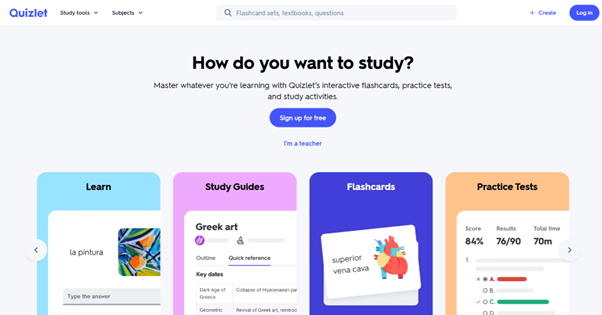
Quizlet supports study through flashcards and test modes. Students use it to prepare for exams and review key terms. Its shared sets reduce prep time. Spaced repetition helps with memory over time. Still, public sets often repeat basic facts. It lacks deeper explanation for complex topics.
● Pros: Strong recall support, fast content access
● Cons: Repetitive content, weak for deep learning
Grammarly
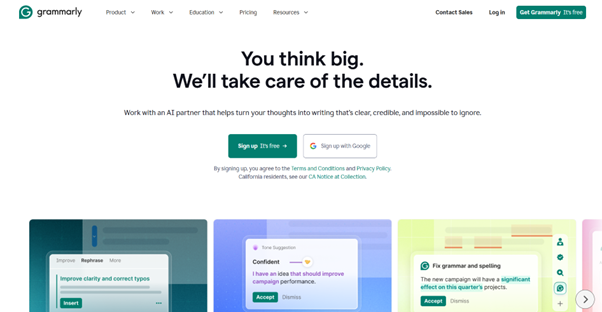
Grammarly checks grammar and improves sentence clarity. Many students depend on it for written work. It gives fast corrections and tone suggestions. The interface is easy to follow. Yet, it can push writing toward uniform style. Subtle voice and nuance may get lost.
● Pros: Clear feedback, easy to apply suggestions
● Cons: Style becomes uniform, limited nuance control
Notion AI
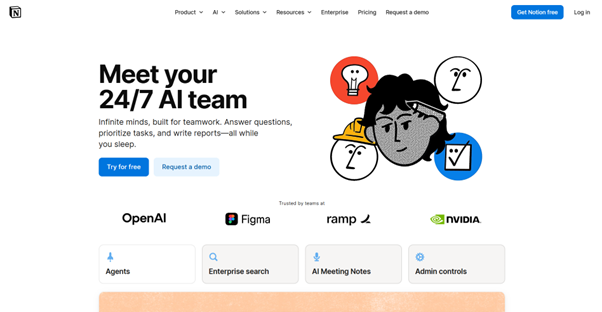
Notion AI helps with notes, drafts, and summaries. Students use it to manage tasks and organize study materials. It keeps content in one place. This reduces tool switching. However, output often needs edits to match context. It may repeat patterns across different tasks.
● Pros: Centralized workflow, flexible structure
● Cons: Output needs edits, pattern repetition
Khan Academy
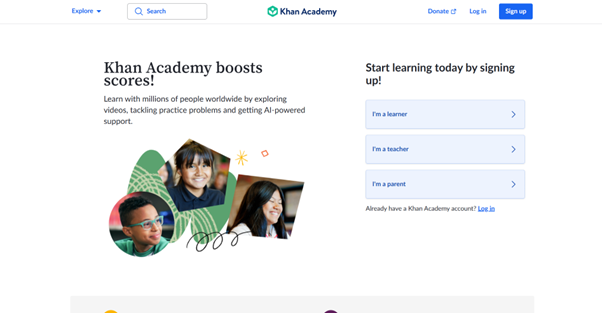
Khan Academy provides lessons, videos, and exercises. Students use it for self-paced learning and review. Its structure builds knowledge step by step. Progress tracking supports consistency. On the other hand, it offers limited adaptation to individual pace. Practice feedback can feel rigid.
● Pros: Clear progression, consistent format
● Cons: Low personalization, rigid feedback
A side-by-side view helps compare how these tools differ in focus and value.
Tool | Core Feature | Pricing |
Quizlet | Flashcards and test modes | $35–40/year (~$11.99 first year) |
Grammarly | Writing correction and tone check | $12/user/month (annual), $30/monthly |
Notion AI | Notes with AI assistance | $24/user/month ($20 annual) |
Khan Academy | Structured lessons and exercises | $0; Khanmigo AI: ~$4/month or $44/year |
Table: Tool Comparison
Monetization Models That Work
Founders can earn revenue through simple and proven models. Freemium works well at early stages. Users start with basic features, then upgrade for more value. Subscription plans bring steady income. Students pay monthly for tools that save time and support better grades.
Some products fit a one-time purchase model. This works for exam packs or focused tools. It suits users who prefer a single payment. School licensing offers another path. Institutions pay for access across classes or groups.
Value must stay clear. Students pay for time savings and better results. Tools should reduce effort and keep tasks simple. If setup takes too long, users drop off. Clear pricing and strong utility help build stable revenue.
Key Challenges Founders Must Address
To build AI tools for students is a real challenge. These issues affect trust, usage, and long-term growth. Founders need clear solutions from the start.
Accuracy remains a core risk. AI can produce wrong or unclear answers. To handle this, add source checks and step-by-step logic. Show how answers are formed.
Academic integrity is another concern. Some users may rely too much on automation. Set clear use guidelines. Include features that support learning, not just answers.
Data privacy also matters. Students share sensitive inputs and personal data. Use secure storage and limit data collection. Be clear about how data is used.
User retention often drops after first use. Many try a tool once and leave. To improve this, focus on daily value. Add progress tracking and small feedback loops.
Each challenge is manageable with careful design. Clear rules, strong output quality, and simple features help build trust and keep users active.
How to Start Building in This Space
Starting in this market does not require a large team or long planning phase. Clear steps help reduce mistakes and save time. Focus on real needs and test ideas early.
Step-by-step plan:
Identify a real student problem
Validate demand
Build MVP
Test with users
Iterate
Launch
Scale
Final Words
AI in education is not a niche trend. Demand continues to grow as students look for faster and simpler ways to study. This creates real space for new products. Indie founders have an edge here. They can act fast and test ideas without delay.
Success depends on execution, not just ideas. Small tools that solve clear problems can gain users quickly. There is no need to build a large system from day one. Start with one feature and improve it based on feedback.
Progress comes from action and consistent updates. The next useful tool will likely come from a small team that moves fast and listens closely to users.


 Entrepreneurship