Your app is live. You’ve shared the link, a few friends have signed up, and you’ve checked the download count more times than you’d admit. Now comes the difficult part: getting people you don’t know to give it a chance.
Where do you start? Paid ads cost money. Social media takes time. And posting your app in every community you can find probably won’t earn you many fans.
Getting your first 1,000 users means making a few deliberate choices about who to reach and how. This guide explains how to market a new app, from finding your first beta users to building on the channels that bring people back.
What to get right before marketing your app
It’s tempting to start promoting your app the moment it works. But what will you say about it, and who needs to hear that? Sort out those two things before spending money on mobile app marketing.
Define your first users and the problem you solve
Say you’ve built an app for tracking expenses. Students could use it. So could families, freelancers, and anyone trying to save money. That gives you plenty of potential users, but a difficult marketing job.
A freelancer chasing receipts before tax season has a different problem from a student running out of money halfway through the month. Which one did you build the app for?
Pick a group you can realistically reach and speak to a few people in it. Ask how they handle the task now. What takes too long? What do they keep putting off? Have they already tried another app?
Pay attention to the workarounds. Someone keeping receipts in three folders and a shoebox may have plenty to tell you about what’s missing.
This early feedback from the first users can help you decide how to market your app: focus your pitch on the most burning problem (i.e., the one mentioned most often). Improving every app feature is not feasible. You just need to signal to those users that you’re actually listening and working hard on making your product better.
Create a clear pitch and a landing page
Your first users may hear about the app through a personal message. That gives you room to explain things, answer questions, and offer help. A landing page needs to do some of that work when you aren’t around.
For instance, this Cameo (a service and a dedicated app that lets you pay celebrities to record personalized video messages) landing page has it all: a key mission statement, a clear step-by-step walkthrough, and a few powerful user testimonials:
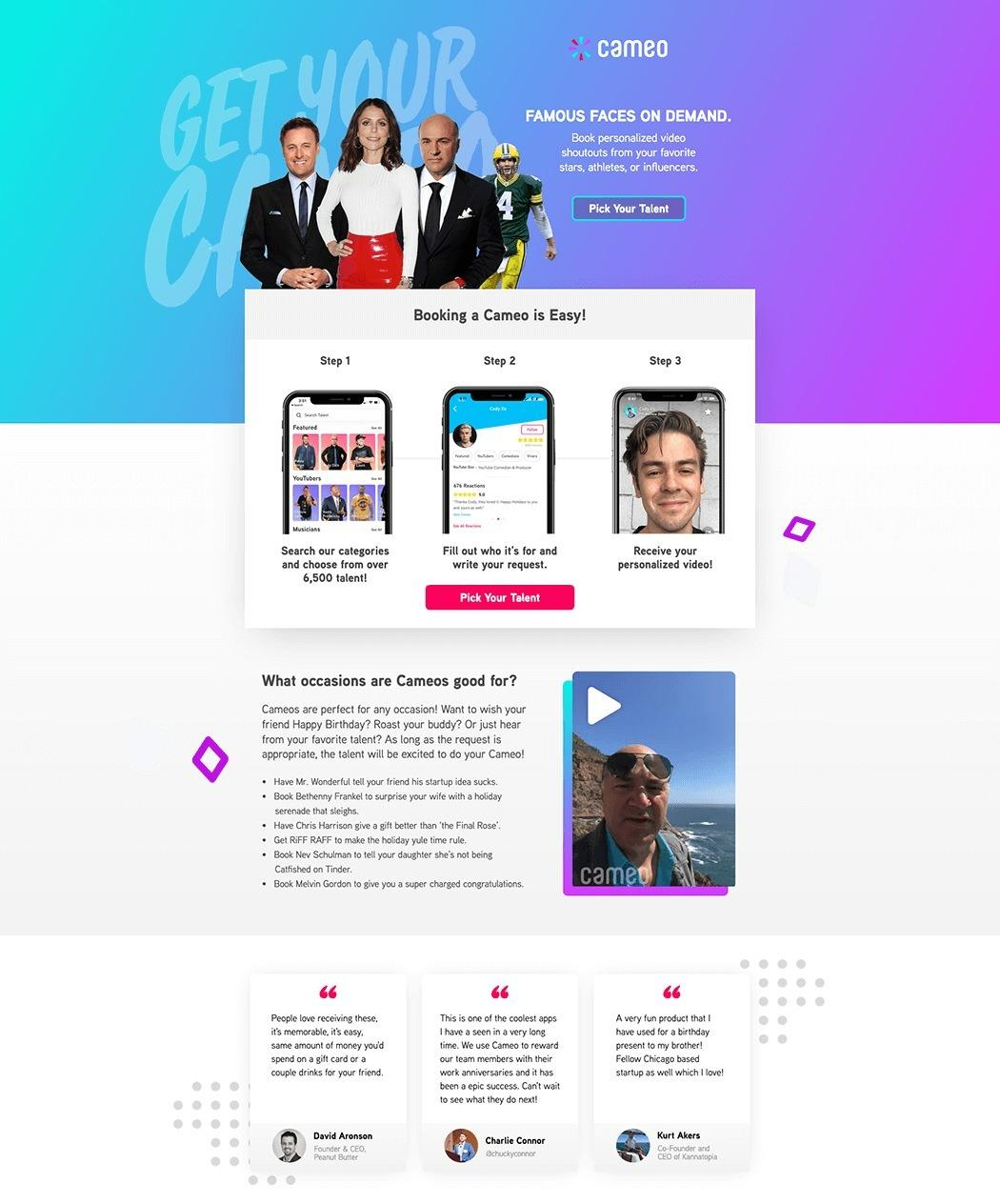
Source: Cameo
Think about what you’d tell someone who was interested but unsure:
What does it do? Describe one useful task they can complete.
How does it work? Show the relevant screen or a brief walkthrough.
What’s the commitment? Explain the cost, trial, or setup involved.
Where do I start? Put the sign-up or download button where it’s easy to find.
Keep your outreach message and page aligned. If you invite tutors to spend less time arranging lessons, don’t send them to a page headed “The future of business management.”
If you’re struggling with the wording, some of the best AI tools for marketing can help you draft a few headline and description options. Give the tool details about your target audience and the problem your app solves, then check whether the suggestions accurately describe what you offer.
Finally, read the page aloud once it’s drafted. Anything you’d feel awkward saying to a potential user probably needs another edit.
How to get your first 100 users
Your first attempts at app user acquisition can start with a handful of people willing to try what you’ve built. Let’s start with personal outreach, which gives you a chance to explain the app and help those first users get started.
Recruit beta users through personal outreach
You probably know a few people who could use your app. Or you know someone who could introduce you to them. When you’re figuring out how to market an app with a small contact list, those introductions are a practical place to start.
Of course, knowing someone doesn’t mean they need your product. A friend might register just to support you and never open it again.
To find people who might actually use it, work through these steps:
Choose contacts whose problems you solve. Include people you interviewed during research, relevant professional contacts, and introductions from friends.
Explain why you’re reaching out. Mention the task your app helps with and why you thought it would be relevant to them.
Ask them to try one thing. Testing a single booking or uploading a few receipts is a manageable request.
Follow up about their experience. Ask what happened when they tried it and whether they needed help.
Talk openly to the people and explain that you’re just beta testing the app at the current stage. Firstly, this will have a positive effect on their motivation. Secondly, it will encourage them to provide more feedback and help make your app better.
Join communities where your audience already spends time
Where would someone go to ask for an app yours could replace? Choose places you’re most familiar with. You may find a whole discussion about the problem you’ve been working on.
Here are several well-known communities to consider:
Reddit. Search for topics connected to your app. Read what people struggle with and which tools they already use. Before joining in with a product suggestion, check the subreddit’s rules and make your connection to the app clear.
Indie Hackers. This is a community for people building online businesses. If your app helps founders manage their work, you have a relevant target audience. Describe what it does and ask members to try a particular feature.
Hacker News. Its Show HN section welcomes projects people can try. Share a working app and explain why you built it.
Product Hunt. People visit to discover new products, so prepare a launch page that shows yours in action. Leave time to answer questions once it goes live.
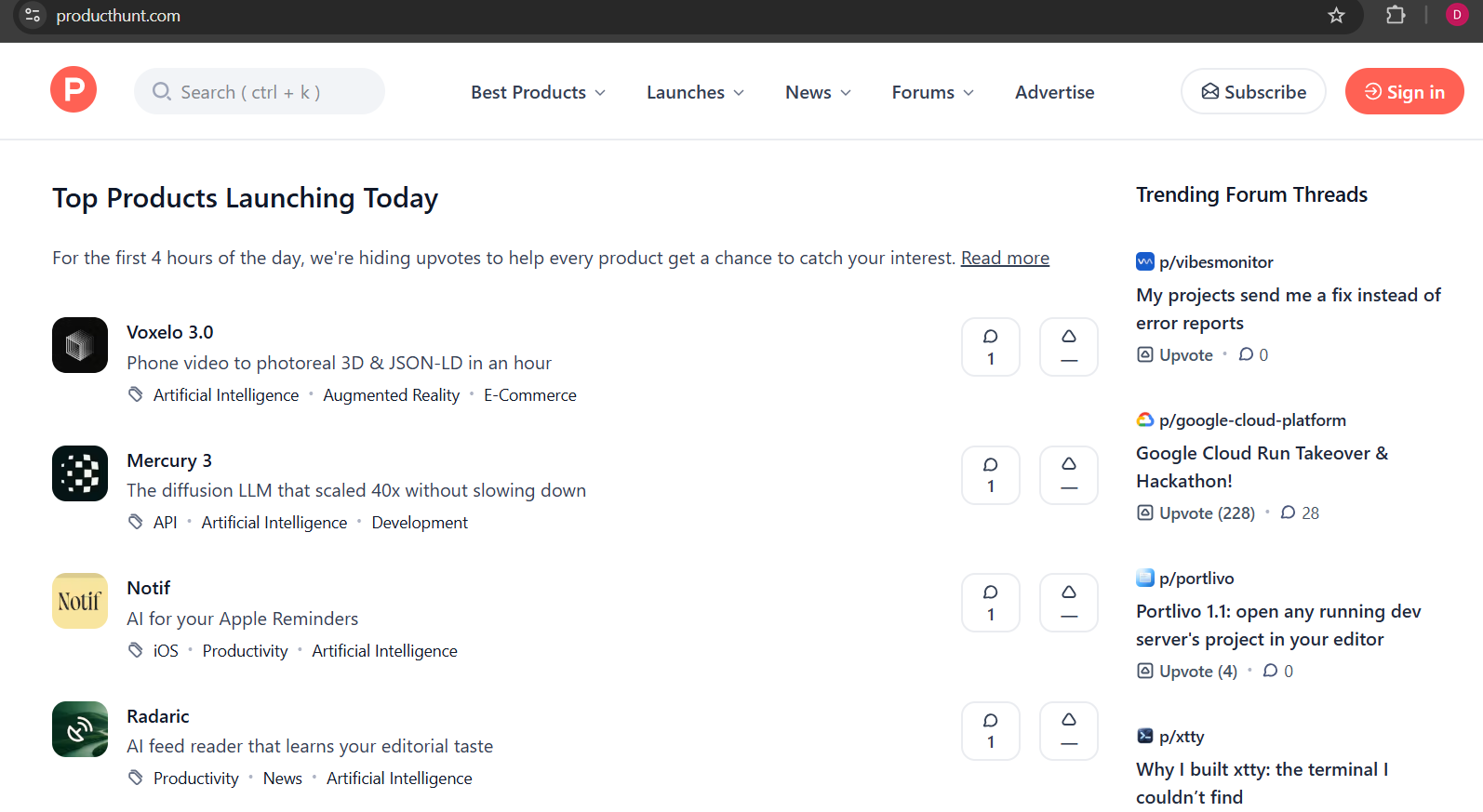
Source: Producthunt
The key takeaway: remember to choose somewhere you can contribute regularly and where potential users already have questions you are prepared to answer.
Turn early feedback into a stronger app
Once people start using your app, you’ll probably receive more suggestions than you can act on. Some will be useful. Others will take the product in a direction you never intended.
User feedback should inform your app growth strategy, but you don’t have to build everything people ask for. Aim to find out what prompted the request. Someone asking for a tutorial may simply be struggling to find a button.
Pay attention when several users get stuck at the same step. Fix that issue, then ask them to try again. And tell the people who reported it what you changed. Your feedback, particularly the good news about things you’ve actually changed on your app, will be a powerful encouraging factor.
Strategies to grow from 100 to 1,000 users
By now, you’ve had a chance to see who uses your app and what they get from it. What you’ve learned can help you decide how to market an app to people beyond your initial circle.
Let’s start with the page people visit before downloading.
Improve your app store listing
Your store listing is part of your mobile app marketing, so when was the last time you looked at it from a visitor’s perspective? It’s easy to upload a few screenshots at app launch and leave them there, even as the app changes.
We recommend beginning with the first thing people see. In most cases, it’s the description. Your description should explain what they can do with the app. “Track shared expenses on group trips” gives them more to work with than “Your ultimate travel companion.”
The space to say something meaningful is extremely limited for any app, so why should you waste yours on empty, salesy pitches and generic claims?
The next thing on your priority list must be screenshots. Because that’s what most users today want to see and can focus on (the attention span is very limited these days; it’s only eight seconds). The screenshots need to support that explanation. Show someone adding an expense or checking who owes what. A settings menu probably won’t help them decide.
And pay attention to questions in your app reviews. If people keep asking whether their friends also need an account, answer that on the page. You already know it matters to potential users.
Create content around problems your app solves
An article announcing your app gives people news about your business. A guide that helps them sort out a frustrating task gives them a powerful incentive to read. Those searches can guide your organic growth strategy: find the questions potential users ask and create content that helps answer them.
To see how to promote an app through useful content, imagine you’re helping people split expenses on a group trip. Think about what happens just before someone needs your product. For your app, that might be a group trip where one person paid for the accommodation and another covered dinner.
You could turn that situation into:
A guide to splitting travel costs fairly.
A short video showing how to settle uneven payments.
A checklist for agreeing on a shared budget before leaving.
Work the app into the explanation wherever it helps. Readers should be able to see what they would do with it, rather than reach the end and find an unrelated download button.
Partner with niche creators and complementary businesses
When you hear “creator partnership,” you might immediately think of expensive sponsored videos. But partnerships don’t have to be expensive.
In fact, modern app creators can enjoy several affordable alternatives, which stipulate that several smaller arrangements could be worth exploring. They’d be especially useful when you’re still working toward your first 1,000 users.
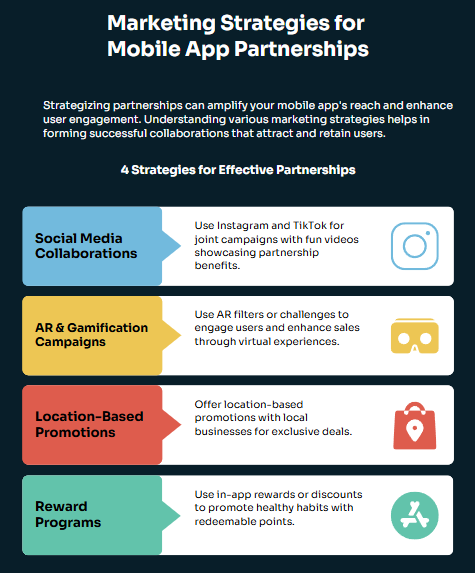
Source: Tyrads
Start with people who already discuss the problem your app solves. There are several ways you could work together:
Give them access to test the app and record an honest walkthrough.
Offer to demonstrate it during a workshop they’re hosting.
Arrange a trial offer for their newsletter subscribers.
Offer a free trial period, after all, to hook the most willing enthusiasts.
You can approach businesses, too. An accountant serving freelancers might find the same app useful for clients who keep losing receipts.
Still, make sure there’s something worthwhile for the partner. You’re asking for their time and access to an audience they’ve worked to build. Free access to your app won’t always be enough.
Give satisfied users a reason to invite others
As an app-maker, you don’t need an elaborate referral system to find out whether users will recommend your app. You should already have a pool of interested users who are willing to recommend and advocate for your app. Run a small email or in-app dissemination asking whether they know someone who has the same problem.
The key to a successful email dissemination is a great introduction. Typically, it’s the one that:
Provides a link the recipients can copy and send.
Explains what their friend will receive.
Finally, you can prepare a small thank-you when the referral meets your requirements.
The reward could include several points. One could be an extra month of premium access. Another could offer a few additional projects on a free account. Work out what you can afford before making the offer.
Of course, a reward won’t fix an app people are reluctant to recommend. If nobody shares it, talk to a few users before increasing the incentive. You may discover that the offer—or the product—still needs work.
Key takeaways
Learning how to market an app successfully takes experimentation, but you don’t need to try every tactic at once.
The key is to focus on the most active users, those who downloaded your app and used it for the longest time and gave their early feedback. You can further explain what the app helps them do, and ask them to invite a few other people to test it.
Your most active users are almost certainly your best advocates. They will be willing to stay longer using your product, tolerate hardships and recommend your app to their family and friends.
To help you digest what we have discussed today, here are the key takeaways to remember:
Make a clear offer. Your landing page and store listing should answer the questions people ask before signing up.
Stay close to early users. Find out where they struggle and fix problems that keep coming up.
Choose optimal touchpoints to promote. Useful content, community discussions, and partnerships should target “warm” people, i.e., those who already expressed interest in your app.
Make your recommendations easy. Give satisfied users a simple way to invite someone else.
As you bring more people in, keep checking what happens after signup. If they try the app once and leave, understanding why deserves as much, if not more, attention as finding the next hundred.


 Entrepreneurship