A roofing contractor spends twenty years learning which shingles crack in Minnesota winters and which ones don’t. A bookkeeper spends a decade catching the tax mistakes that sink small businesses. Both know things most people don’t. However, most of them never write a single word about it.
That inaction costs businesses real money. Buyers today research extensively before they ever talk to a salesperson, and they gravitate toward the source that actually answers their questions.
Generic advice doesn’t win that moment. Specific, hard-earned knowledge does.
This post breaks down how to turn what you already know into content that pulls in leads and moves people toward a purchase. You’ll learn how to find the expertise worth writing about, shape it into formats people actually search for, and connect it to the decisions your buyers are trying to make.
Turn Recurring Customer Questions into Expert Content
Your customers ask the same questions over and over, and that repetition is a gift. Every question that comes up again and again points to a gap in public knowledge, one that you’re already equipped to fill.
When you turn those questions into articles, guides, or FAQ pages, you show prospects that you understand their exact situation before they even reach out. That kind of specificity builds trust faster than generic marketing copy ever will.
How to implement this:
Track the questions your sales team, support staff, or front desk hears most often.
Sit down with them once a month and write down every recurring question, then sort them by topic.
Turn each cluster into a standalone piece of content that answers the question completely, with real detail instead of vague reassurance.
Publish these pieces on your website where search engines and AI tools can find them, and link to them directly from your sales and support conversations.
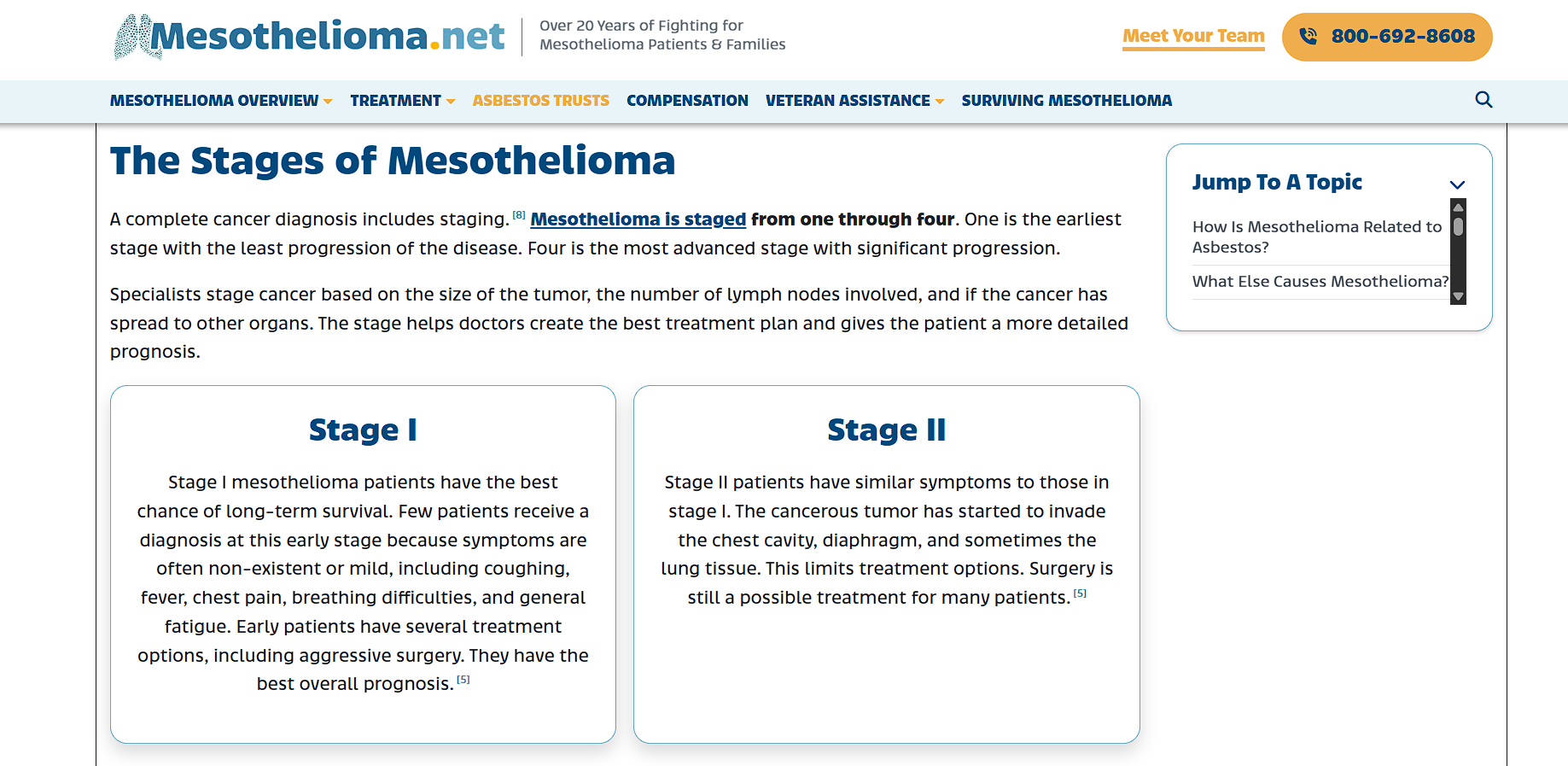
Take a look at how this is done by Mesothelioma.net, a resource site for people diagnosed with mesothelioma.
People searching for information after a diagnosis have urgent, specific questions, like what causes the disease, what the symptoms look like, how doctors diagnose it, what the stages mean, and what treatment and financial options exist.
Mesothelioma.net answers all of it in one extensive mesothelioma overview page that walks through causes, symptoms, types, diagnostic procedures, staging, treatment options, and even payment resources like trust funds.
This single page turns a moment of fear and confusion into a moment of clarity, and it positions the site as a dependable source right when readers need one most.
Source: mesothelioma.net
Break Complex Topics Down into Accessible Segments of Information
Deep expertise doesn’t help anyone if it stays locked in jargon. Breaking a complex topic down into plain, accessible language makes your business easier to understand and easier to trust.
People don’t need every technical detail to make a decision. They need the core idea explained clearly enough to act on it with confidence.
A Google study found that people who read simplified content reported a much easier time processing it than those who read the technical original, with a clear drop in the mental effort readers spent just to follow along. Lower that mental load, and you keep readers on the page instead of losing them to confusion.
How to implement this:
Pick one dense topic from your industry and explain it the way you’d explain it to a smart friend who works in a different field.
Cut jargon wherever you can, and define any unavoidable technical term in one short sentence right where it appears.
Use short paragraphs, direct sentences, and headers that guide readers through the logic step by step.
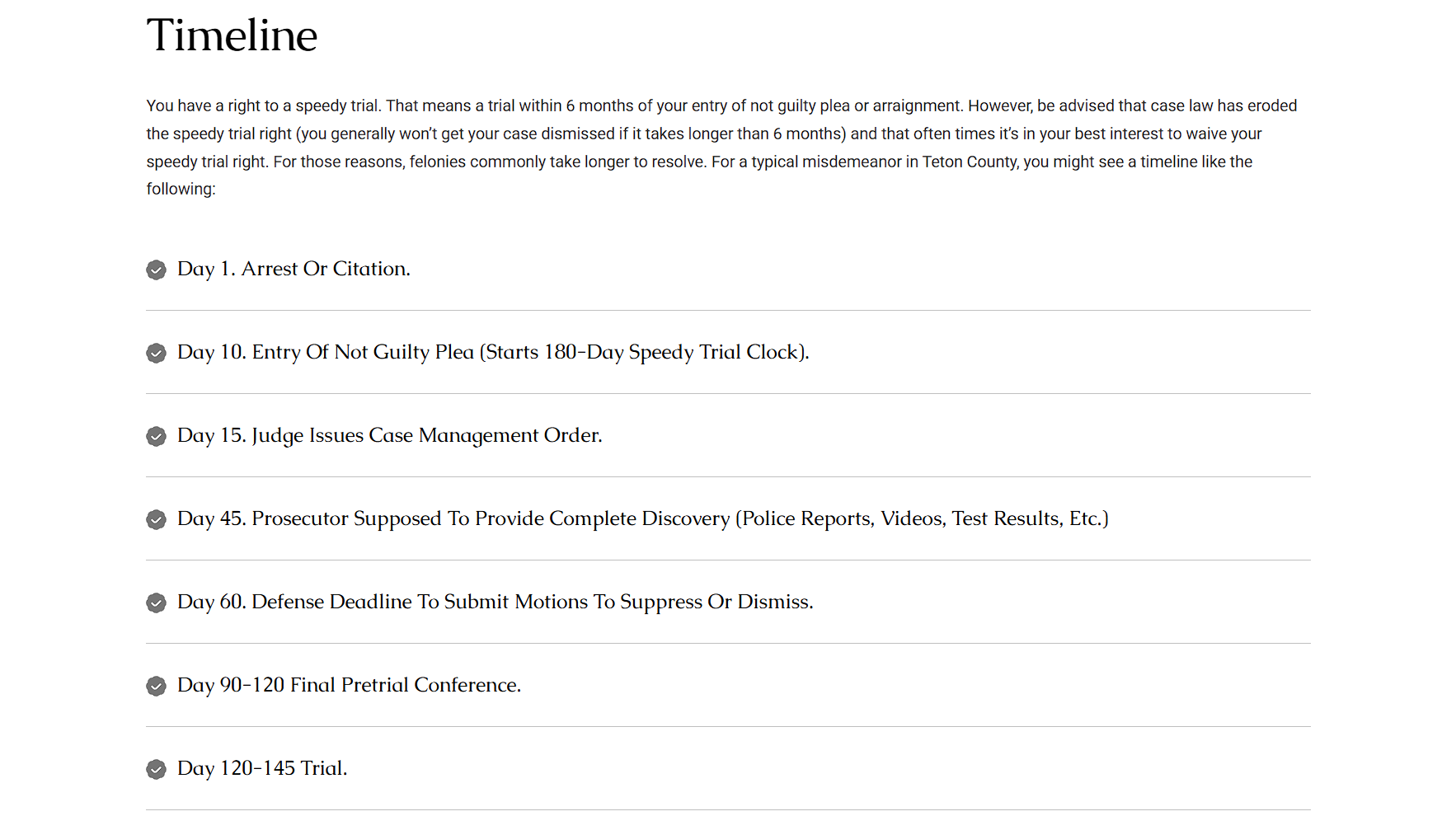
Freeburg Law, a Wyoming firm handling personal injury and criminal defense cases, puts this into practice on its Wyoming Criminal Defense Lawyer landing page.
The page walks visitors through different criminal charges and what to expect at each stage, all in plain English with almost no legal jargon. It keeps sentences short and gets to the point quickly, so someone facing a criminal charge can understand their situation without needing a law degree first.
That clarity turns a frightening, confusing moment into something a reader can actually act on, which builds trust before a potential client ever picks up the phone.
Source: tetonattorney.com
Turn Expert Knowledge into Informed Decisions
People rarely buy the first time they encounter a business. Before they commit to anything, they want to understand their options and feel confident in their choice.
Businesses that educate readers first, without pushing for an immediate sale, earn trust that pays off over the long run. Readers remember who helped them think clearly, and they come back to that source when they’re finally ready to act.
When your content helps someone understand their own situation, they associate your brand with clarity instead of a sales pitch. That association carries weight even if the reader doesn’t convert right away, since trust built early tends to outlast any single transaction.
How to implement this:
Map out the questions your prospects ask themselves before they’re ready to buy, not just the questions they ask once they’re close to a decision.
Write content that helps them assess their own needs, compare their options, and understand what a good outcome looks like for their specific situation.
Give them a clear, useful next step, but let the content stand well on its own value first.
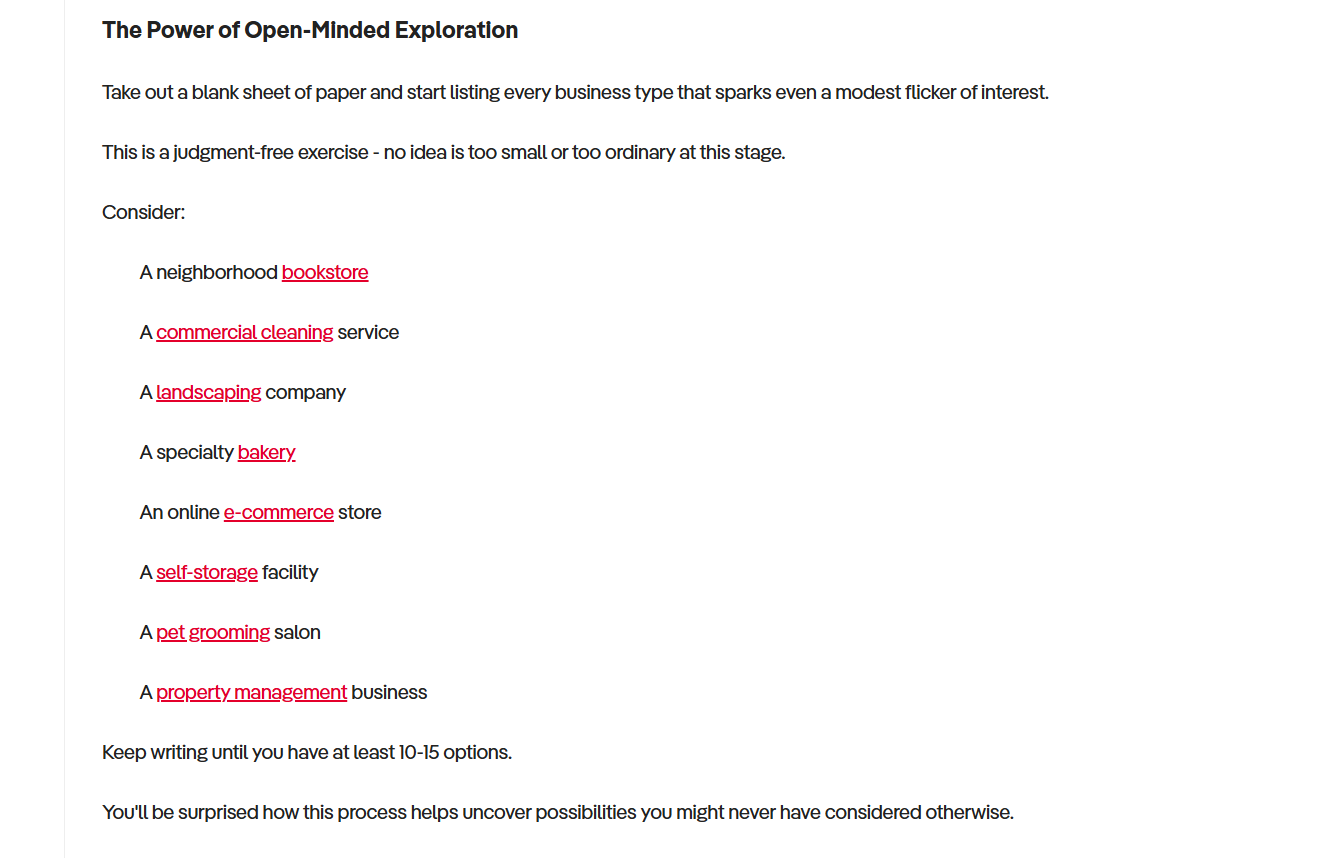
Business For Sale, a marketplace for buying and selling businesses across Australia, applies this well through its guide on finding the right business to buy.
The guide walks readers through how to assess their own skills, interests, and financial position before pointing them toward the type of business that fits. It doesn’t rush anyone toward a listing.
Instead, it helps readers understand themselves first, which makes the eventual search far more focused and the eventual purchase far more confident.
Source: businessforsale.com.au
Build Educational Resources People Return to Repeatedly
A blog post about a passing trend fades fast. A well-built tutorial or practical guide keeps pulling in readers years after you publish it.
That ongoing traffic does more than boost your numbers. It keeps your brand in front of the same audience repeatedly, so when a reader finally needs to buy, your business is already the one they trust and recognize.
The data backs this up quite clearly. A study on brand selection found that when shown a lineup of competing brands, prospects were 83.6% more likely to choose the one that had already given them useful, educational content.
Consistent, repeated exposure to genuinely helpful material shapes buying decisions long before a reader ever reaches checkout.
How to implement this:
Focus on topics that stay relevant regardless of trends or seasons, such as foundational how-to guides, glossaries, and step-by-step tutorials that solve a real problem your audience faces regularly.
Go deep rather than wide, covering a topic completely instead of skimming the surface.
Update these guides periodically so the information stays accurate, and link to them from newer content to keep sending traffic their way.
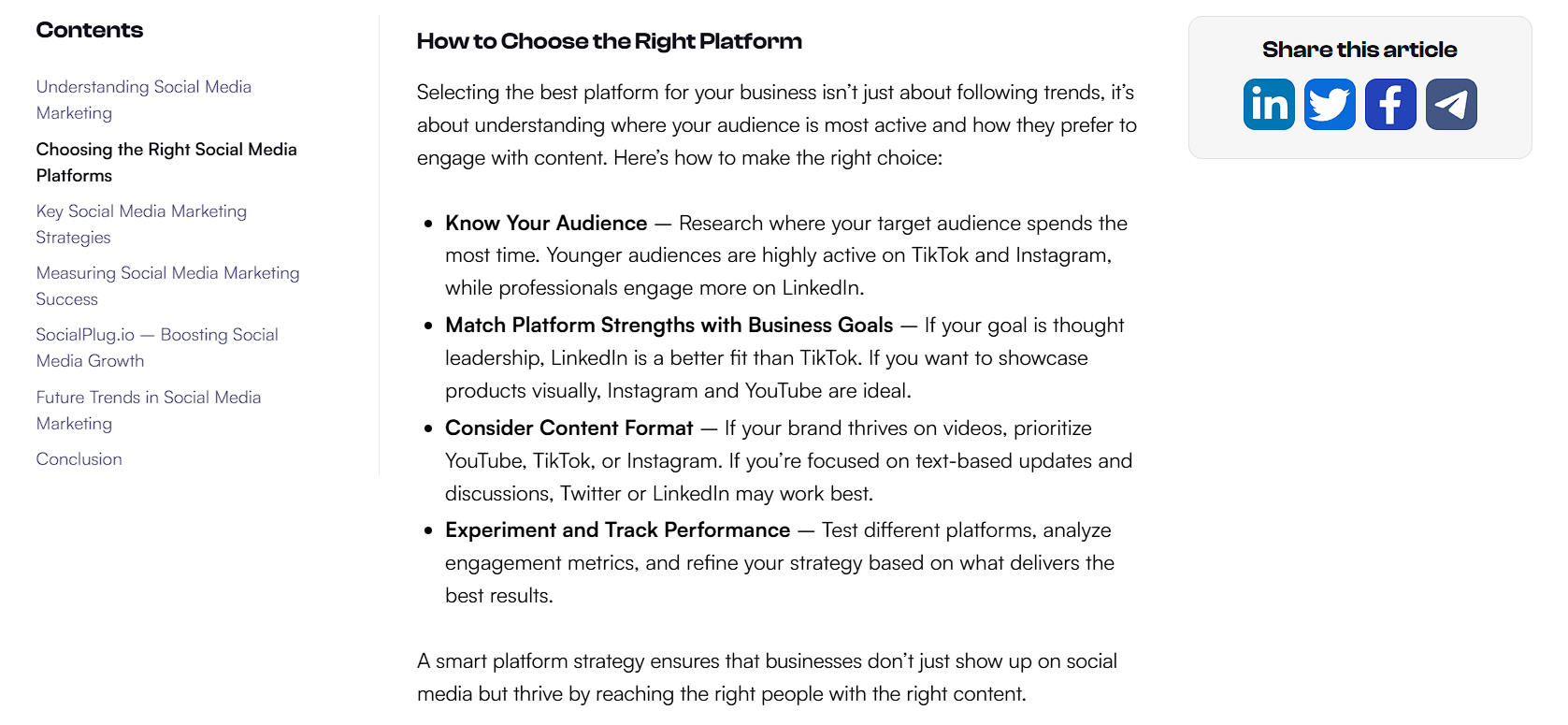
Socialplug, a marketplace where people buy followers, likes, views, and comments to grow their social media presence, built exactly this kind of resource with its complete guide to social media marketing.
The guide covers the full basics, from choosing platforms to creating content to running ads and tracking results, giving beginners everything they need in one place. Because it’s thorough enough to answer nearly any starting question, readers bookmark it and return to it repeatedly.
This keeps Socialplug visible throughout the reader’s entire learning process.
Source: socialplug.io
Identify the Knowledge Gaps Your Competitors Overlook
Most industries already have plenty of content covering the obvious topics. Everyone writes about best practices, top trends, and the usual how-to questions.
The real opportunity sits in the gap nobody else has bothered to explore – the problem your audience hasn’t fully recognized yet, but will soon feel the effects of. Businesses that find and name that gap first get remembered as the ones who saw it coming.
How to implement this:
Look past the headlines your competitors are chasing and study the raw data behind your industry.
Research trends in demand, shifting demographics, regulatory changes, or emerging technical constraints.
Ask what problem your audience will face in two or three years that almost nobody is discussing today.
Then use whatever proprietary data, direct experience, or specialized access you have to explain that problem with more depth and rigor than anyone else can match.
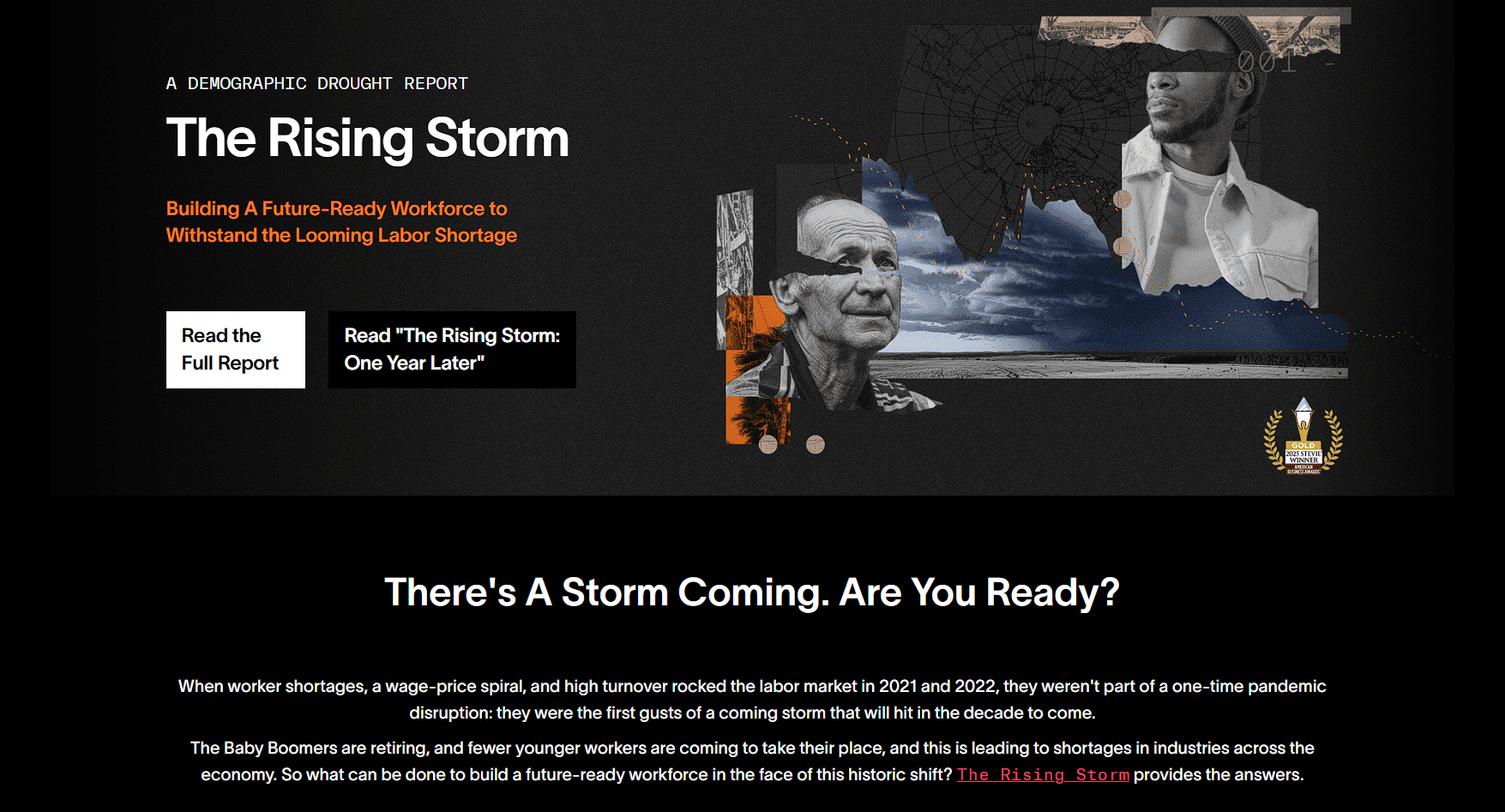
Lightcast, a company specializing in labor market data and workforce analytics, built its authority this way. While most HR and recruiting brands published generic content on skills for 2026 or standard hiring advice, Lightcast focused on something almost nobody else was quantifying – the coming demographic cliff and its effect on the labor supply.
Using its own proprietary data, the company produced The Rising Storm, a 69-page report forecasting a serious labor shortage with a level of detail no competitor had matched.
By naming and measuring a problem before anyone else does, they educate the entire market on a crisis only they can explain. This makes it nearly impossible for competitors to claim the same insight after the fact.
Source: lightcast.io
Final Thoughts
Expertise sitting in your head doesn’t build leads. It has to leave your head and land somewhere a prospect can actually use it.
Answer the questions people already ask you.
Explain hard topics without dumbing them down.
Let readers make sense of their own situation before you ever ask for the sale.
Build resources they’ll come back to more than once.
Look for the problems your competitors haven’t noticed yet.
Do this consistently, and your content won’t appear as mere marketing. It will become the reason people choose you before they even talk to you.


 Entrepreneurship